
Decor Match
ZenLife Games LtdPuzzle
4.87.90K Reviews
- Version
- 1.352.0821
- Installs
- 5.00M
- Age Rating
- Everyone
Screenshots



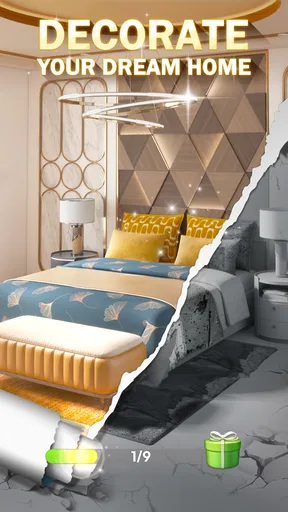
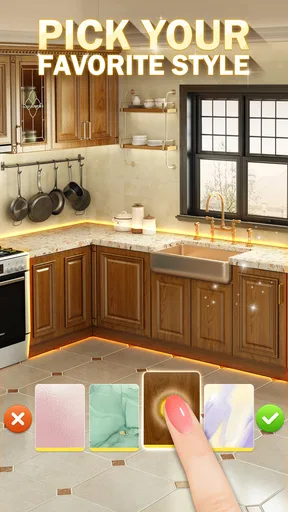

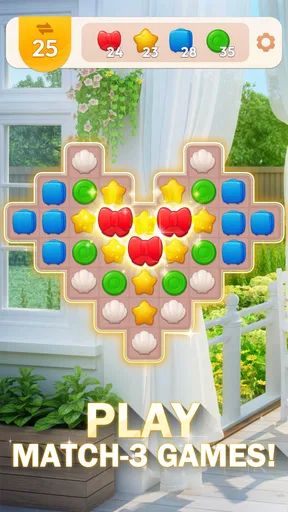
Our Review of Decor Match
 Analysis by Appyee
Decor Match is the kind of puzzle game I open when I want something easy to understand but still satisfying enough to hold my attention. It combines match-three boards with interior decoration, so each short session gives me two things to do: clear pieces and gradually shape a room. That pairing makes it more relaxing than a purely competitive puzzle game, while the decorating layer gives the usual swaps and combos a visible purpose.
Developed by ZenLife Games Ltd, this free puzzle game is aimed at Everyone and runs on Android 7.0 or later. It has built a sizeable audience, with an average rating of 4.8 from around 88 thousand ratings and more than 5 million installs. Those figures suggest that the basic formula works for a lot of players, but they do not tell the whole story. In my experience, the real question is whether you enjoy the rhythm of match-three play enough to accept its occasional friction.
How the everyday play loop feels
The baseline workflow is simple. I enter a puzzle, look for matching pieces, and use the available moves to complete the objective. Finishing the board lets me progress through the decorating side, where the results feel more tangible than a score that disappears after the level. A few completed stages can turn a spare moment into a small project, which is why the game works well during a commute, a coffee break, or a quiet evening.
The decorating element is important because it changes how I judge progress. In a conventional match-three game, I may keep playing only to reach the next stage or beat a personal score. Here, clearing puzzles supports a visual goal. I get a stronger sense of continuity because the rooms provide a reason to continue, even when an individual board is not especially memorable.
The match-three foundation remains familiar rather than revolutionary. That is both a strength and a limitation. I never need a long tutorial to understand the basic interaction, and someone already comfortable with this genre can start making sensible moves immediately. On the other hand, players looking for a radically different puzzle system may find the core play recognizable from the beginning.
The advertised ASMR-style presentation also affects the mood. The small sounds and visual responses make matches feel more tactile, especially when I play with headphones at a moderate volume. I would not describe it as a full relaxation tool, because a difficult board can still become tense, but the presentation generally supports a calmer pace than an action game.
A practical routine for short sessions
My most reliable routine is to begin by scanning the entire board instead of making the first obvious match. I look for moves that open blocked areas, create a larger combination, or bring several useful pieces into the same region. This takes only a moment, but it prevents the common mistake of spending the opening turns on harmless matches that leave the board less flexible.
When I have limited time, I treat the puzzle objective as more important than making the prettiest move. If the goal requires clearing a particular type of piece or reaching a specific area, I prioritize that requirement before chasing a large combination. A spectacular match is not automatically useful if it happens away from the part of the board that is holding back the level.
After completing a stage, I use the decorating choice as a natural stopping point. This creates a repeatable habit: play a level, make the room decision, then decide whether I actually want another round. It is a better way to control session length than starting another puzzle automatically and discovering much later that I have been playing longer than planned.
Settings and presentation choices worth checking
I recommend checking the sound and notification options before settling into regular play. The game’s sensory feedback is part of its appeal, but not everyone wants repeated effects in a quiet room or during work. Lowering sound rather than disabling everything can preserve the satisfying feel of a successful match while making the experience less intrusive.
Notifications deserve the same practical attention. If reminders interrupt you at inconvenient times, turning off unnecessary alerts can make the game feel more like something you choose to open rather than something that calls for attention. This is especially useful if you already have several mobile games competing for your time.
It is also worth reviewing the purchase controls on the device used to play. Decor Match is free to download, but its in-app items range from $0.99 to $99.99 each. That is a broad range, and it makes a simple spending boundary sensible. I prefer deciding in advance whether I will spend anything, rather than making a purchase because a difficult board has made me impatient.
The game is available as a free experience, but “free” does not mean every player will experience it in exactly the same way. A player who refuses all optional purchases may need more patience when progress slows, while someone comfortable spending may have a smoother route through obstacles. I consider this an important part of the decision, not a minor footnote.
Small habits that make boards easier
The fastest improvement I noticed came from looking for combinations before ordinary matches. A larger combination can affect a wider section of the board and may create a follow-up opportunity, whereas a basic match often solves only the immediate square. I do not force this rule when it would ignore the level objective, but I always check for a stronger option first.
Another useful habit is to work from the bottom when the board allows it. Clearing lower pieces can cause new pieces to fall into place, producing opportunities that were not visible at the start. This is not a guarantee of success, and some objectives require attention elsewhere, but it is usually more productive than repeatedly clearing the top without changing the board’s structure.
I also try to preserve flexibility during the opening moves. If two possible matches are equally safe, I choose the one that leaves more possible follow-ups. This matters because a board with several open paths is easier to recover than one where I have removed the only useful alignment. In difficult stages, avoiding a bad position can be more valuable than gaining a small immediate advantage.
When a level is nearly complete, I stop playing on autopilot. The final few moves are often where wasted turns matter most. I check the remaining target, consider whether a chain reaction could handle it, and only then commit. That pause is particularly helpful when the board looks almost finished and the temptation is to make the first available match.
For players who enjoy the interior-design side more than the puzzles, I suggest treating the board as the cost of reaching the next visual change. That mindset makes an awkward stage less frustrating. For puzzle-focused players, the reverse approach works: view the decoration as a progress marker and concentrate on improving board reading rather than judging every design choice.
Where experienced play still has limits
Good habits cannot remove every source of difficulty. Match-three boards involve the pieces that appear after each move, so a careful plan can still be disrupted by an unhelpful sequence. When that happens, I try not to interpret one failed attempt as proof that the level is unfair. Sometimes the better response is simply to reset my approach on the next attempt instead of forcing the same opening.
The game can also become repetitive for players who want constant mechanical variety. The room progression provides a changing visual context, but the basic act of matching remains the central activity. If you prefer logic puzzles with a single carefully designed solution, or competitive games where every move directly reflects another player’s skill, this may feel too gentle and familiar.
There is a trade-off between relaxation and urgency. The ASMR-like feedback and decorating theme make the game approachable, yet limited moves or an awkward board can create pressure. I enjoy that contrast in moderation, but someone seeking completely stress-free play may prefer a puzzle app without progression barriers or purchase prompts.
The game is also not my first recommendation for a child simply because its age rating is Everyone. The rating makes it broadly accessible, but younger players may still benefit from an adult setting spending boundaries and checking how the device handles purchases. The mechanics are easy to grasp; managing the surrounding mobile experience is the part that deserves more attention.
Version 1.352.0821 is the current version I would look for when installing, and the Android requirement of 7.0 keeps it accessible to many older devices. Even so, the quality of play can depend on the phone’s screen, sound setup, and available storage. On a smaller display, scanning a busy board may take more effort, while headphones make the sound-focused presentation more noticeable.
Who will enjoy it most
I think Decor Match is a strong fit for someone who wants a casual puzzle game with a visible sense of progress. It suits players who like decorating themes but do not want a complicated simulation, and it works for people who enjoy match-three games but appreciate having something beyond a score screen. The free entry point makes it easy to try without committing money first.
It is particularly convenient for short, repeatable sessions. I can play one stage while waiting for an appointment, stop after a decorating decision, and return later without needing to remember a complicated story or control system. That makes it more practical than a large strategy game when I only have a few minutes available.
I would steer competitive puzzle fans toward a more skill-focused alternative if they want leaderboards, direct competition, or precise control over every variable. I would also suggest a different type of interior-design game to anyone who mainly wants to plan rooms and dislikes puzzle gates. In this title, decoration is the reward and motivation, but matching is still the main job.
Players who are sensitive to repetitive tasks or who prefer games with no optional spending pressure should approach carefully. The purchase range means it is wise to establish limits before playing, and the familiar match-three structure may not provide enough novelty for long-term engagement. Its strengths are comfort, accessibility, and a clear loop rather than deep strategic complexity.
My final view after settling into the rhythm
After using the simple habits above, I found the game more enjoyable than when I treated every board as a race to make any available match. Scanning first, protecting flexible positions, and matching the move to the objective gave the puzzles a little more depth without turning them into work. The decorating progress then became a satisfying payoff instead of a distraction from the board.
The best reason to try Decor Match is its balance between a familiar puzzle routine and visible room-by-room progress. It does not reinvent the genre, and experienced players should not expect every level to reward perfect planning. What it does well is make ordinary match-three sessions feel connected to a relaxing visual project.
For me, it is worth recommending to friends who want a free, approachable puzzle game for everyday downtime. I would mention the in-app purchase range honestly, advise checking the settings, and suggest playing with a clear stopping point. If that combination of matching, gentle presentation, and interior decoration sounds appealing, Decor Match is a sensible download. If you want pure puzzle depth, unrestricted relaxation, or room design without board-based progression, another category will probably serve you better.
Verdict
Strengths of Decor Match
- Relaxing match-3 gameplay with a creative home-decorating theme.
- Short levels make it easy to play during quick breaks.
- Decor choices let you personalize rooms to your preferred style.
- Progression provides new spaces and furniture to unlock over time.
- Bright visuals and simple controls are suitable for casual players.
Limitations of Decor Match
- Some levels may become difficult without boosters or extra attempts.
- In-app purchases can speed up progress and add pressure to spend.
- The decorating options may feel limited compared with dedicated design games.
- Repeated match-3 objectives can become predictable after extended play.
- Ads may interrupt the experience, especially when claiming free rewards.
Other Releases by ZenLife Games Ltd
View All


Similar Picks in This Category
View All
Block Blast!
HungryStudio4.8

Braindom: Brain Games Test
Lahana Game Studio4.6

AMAZE!
CrazyLabs LTD4.6

Sudoku - Classic Sudoku Puzzle
Oakever Games4.7

Art Puzzle - Puzzle Games
Easybrain4.8

Amaze GO!
Oakever Games4.9
Frequently Asked Questions
What is Decor Match, and how does the gameplay work?
Decor Match is a casual home-design puzzle game that combines match-based challenges with interior decorating. You complete levels by matching similar pieces, usually to earn coins, stars, or other rewards. Those resources can then be spent on renovating rooms, selecting furniture, choosing colors, and unlocking decorative elements. The game is designed for short sessions, although later puzzles may require more planning and strategic use of boosters.
Can Decor Match be played offline?
Some parts of Decor Match may remain available without an internet connection, particularly previously loaded puzzle content and basic gameplay. However, an internet connection is generally recommended for the complete experience. Online access may be needed to download new levels, synchronize progress, display advertisements, receive limited-time events, or access certain rewards. Availability can also depend on the version installed and the device’s operating system.
Is Decor Match free to download and play?
Decor Match is typically free to download, allowing players to start the game without paying an upfront purchase price. Nevertheless, it may include optional in-app purchases for coins, boosters, extra moves, energy, or other items that speed up progress. Advertisements may also appear during play. You can usually continue without spending money, but patience and careful resource management may become more important as the difficulty increases.
Does Decor Match contain ads or in-app purchases?
Yes, Decor Match may include both advertising and optional in-app purchases. Ads can sometimes provide useful rewards, such as additional coins, boosters, or extra attempts, although their frequency may vary by device, region, and game version. Purchases are generally intended to help players progress faster rather than being strictly required. To avoid accidental spending, review your Google Play or App Store purchase settings before playing.
What devices are compatible with Decor Match, and is progress saved?
Compatibility depends on the specific Android or iOS version supported by the current release, as well as the available storage and performance of your device. Newer phones and tablets should provide smoother loading and animations, while older hardware may experience slower performance. Progress-saving options can vary, so connecting the game to an available account or platform service is recommended if you want to protect your progress when changing or reinstalling devices.
Play our best games!


